
Q3. Discuss Hamlet as a Revenge Tragedy and Examine How It Conforms to and Deviates from Aristotelian Principles of Tragedy . (20)
ANSWER :
IGNOU MEG 02 Solved Assignment Q3 Answer 2025–26 – William Shakespeare’s Hamlet (1600–1601) stands as one of the greatest tragedies in world literature and a defining example of the Elizabethan revenge play. Drawing inspiration from Thomas Kyd’s The Spanish Tragedy, Shakespeare transforms the conventional revenge formula into a profound philosophical and psychological exploration of human nature. Hamlet is both a revenge tragedy—a genre characterized by murder, retribution, and moral conflict—and a philosophical drama that interrogates the meaning of justice, duty, and existence.
At the same time, Hamlet engages deeply with Aristotle’s principles of tragedy, as outlined in his Poetics. While it adheres to some classical elements—such as the tragic hero, hamartia (tragic flaw), and catharsis—it also deviates from Aristotle’s model in structure, unity, and moral clarity. Shakespeare’s tragedy expands the scope of Aristotle’s definitions by adding psychological depth, existential reflection, and dramatic complexity.
Hamlet as a Revenge Tragedy
1. Classical Features of the Revenge Tradition
IGNOU MEG 02 Solved Assignment Q3 Answer 2025–26 – The revenge tragedy was a popular Elizabethan genre, heavily influenced by Senecan models. Typical elements include:
-
A murder that demands vengeance.
-
The appearance of a ghost urging revenge.
-
Delay and hesitation of the avenger.
-
Scenes of madness, real or feigned.
-
Violent action leading to multiple deaths.
Shakespeare’s Hamlet incorporates all these features while simultaneously subverting them to create a more complex dramatic experience.
2. The Ghost and the Motive for Revenge
The play begins with the appearance of King Hamlet’s Ghost, setting in motion the revenge plot. The ghost’s demand that Hamlet “revenge his foul and most unnatural murder” introduces the central moral and psychological conflict. However, unlike typical avengers who act swiftly and brutally, Hamlet is contemplative and uncertain. His hesitation is not weakness but a philosophical struggle with morality, justice, and the consequences of revenge.
This hesitation adds psychological realism absent in earlier revenge plays. Hamlet’s internal conflict transforms the genre from one of mere bloodshed to one of introspection and moral inquiry.
3. Delay and Psychological Conflict
IGNOU MEG 02 Solved Assignment Q3 Answer 2025–26 – In traditional revenge tragedies, the avenger acts decisively; in Hamlet, action is delayed. Hamlet’s inability to kill Claudius when he finds him praying epitomizes this tension: he seeks not mere revenge but just revenge. He fears that killing Claudius at prayer will send his soul to heaven, an act inconsistent with justice for a “murder most foul.”
This delay creates the play’s tragic tension and psychological depth. Hamlet’s famous soliloquy—“To be, or not to be”—captures his existential crisis. He contemplates life, death, and the afterlife, expanding the revenge motive into a philosophical exploration of human consciousness. Thus, Hamlet conforms to the revenge tradition in structure but transcends it in meaning.
4. Madness and Deception
Madness is another essential feature of revenge tragedy. Hamlet adopts an “antic disposition” to mask his intentions, blurring the boundary between real and feigned insanity. His behavior confuses other characters and provides him with space to uncover the truth. Ophelia’s descent into genuine madness contrasts with Hamlet’s strategic madness, emphasizing the theme of appearance versus reality.
5. Violent Action and Catastrophe
Like other revenge plays, Hamlet ends in bloodshed and moral resolution. The final act features the deaths of Claudius, Gertrude, Laertes, and Hamlet himself. Justice is achieved, but only through destruction. In killing Claudius, Hamlet fulfills his revenge but sacrifices his own life, achieving both retribution and catharsis.
However, Shakespeare adds moral ambiguity to the conclusion. The audience is left to question whether revenge restores justice or perpetuates a cycle of violence.
Aristotelian Principles of Tragedy
IGNOU MEG 02 Solved Assignment Q3 Answer 2025–26 – In his Poetics, Aristotle defined tragedy as “an imitation of an action that is serious, complete, and of a certain magnitude” that evokes pity and fear, leading to catharsis (purging of emotions). He outlined several principles:
-
The presence of a tragic hero—noble yet flawed.
-
The hero’s downfall caused by hamartia (tragic flaw).
-
Anagnorisis (recognition or discovery).
-
Peripeteia (reversal of fortune).
-
Catharsis—emotional purification for the audience.
-
Unity of action—a coherent and focused plot.
Hamlet and Aristotelian Tragedy
1. The Tragic Hero
Hamlet embodies Aristotle’s concept of the tragic hero. He is noble, intelligent, and moral, but his excessive introspection—his hamartia—leads to inaction. His intellect and conscience make him question rather than act. As he says, “Thus conscience does make cowards of us all.”
Hamlet’s downfall is not due to villainy but his own reflective nature. His virtue (thoughtfulness) becomes his weakness, fitting Aristotle’s idea of a hero “neither wholly good nor wholly evil.”
2. Hamartia and the Inner Conflict
IGNOU MEG 02 Solved Assignment Q3 Answer 2025–26– Aristotle’s hamartia denotes a fatal flaw leading to downfall. For Hamlet, this flaw is his indecision and overthinking. His delay allows Claudius to consolidate power and manipulate events, resulting in tragedy. Yet, Shakespeare complicates Aristotle’s moral simplicity—Hamlet’s hesitation is not cowardice but moral reasoning. His failure to act until the final scene highlights the tension between ethical contemplation and the demand for revenge.
3. Peripeteia and Anagnorisis
In classical terms, peripeteia is the reversal of fortune, and anagnorisis is the moment of recognition. In Hamlet, both occur in the final act. When Hamlet realizes that his delay has led to unnecessary deaths—Polonius, Ophelia, and Laertes—he accepts his fate: “There’s a divinity that shapes our ends, rough-hew them how we will.”
This recognition brings spiritual clarity and resignation. His peripeteia occurs when he shifts from hesitation to action, killing Claudius in an act of moral and emotional resolution.
4. Catharsis
Aristotle viewed catharsis as the purgation of pity and fear. In Hamlet, the audience experiences both intensely—pity for Hamlet’s suffering and fear for the destructive consequences of revenge. The tragic ending provides emotional release, not through moral order restored, but through the inevitability of fate.
Shakespeare thus extends Aristotle’s concept of catharsis from moral cleansing to psychological and existential insight.
5. Unity of Action, Time, and Place
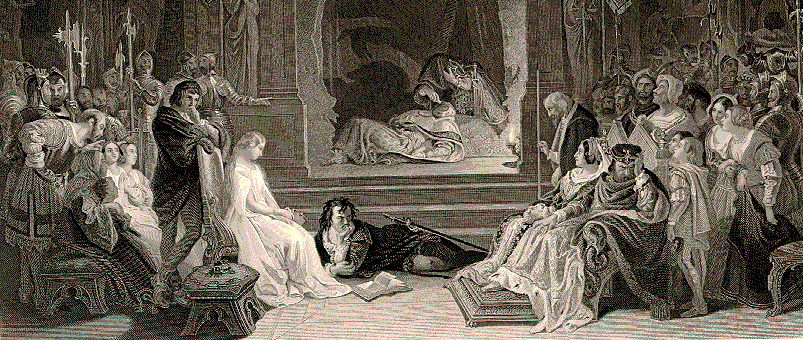
IGNOU MEG 02 Solved Assignment Q3 Answer 2025–26 – Aristotle emphasized the unities of action, time, and place. Hamlet does not strictly observe these rules. The action spans months, multiple locations, and several subplots (Polonius’s family, Fortinbras’s campaign, the play-within-the-play).
However, Hamlet maintains unity of action in a thematic sense. Every subplot—revenge, deception, madness—converges on the central question of justice and moral responsibility. Shakespeare thus sacrifices formal unity for psychological and thematic coherence, expanding the Aristotelian framework to suit Renaissance complexity.
Deviations from Aristotelian Tragedy
While Hamlet conforms to Aristotle’s principles in spirit, it deviates in structure and purpose:
-
Multiplicity of Plots – Unlike Aristotle’s preference for singular focus, Hamlet integrates several interwoven plots.
-
Introspective Hero – Aristotle’s heroes act; Hamlet thinks. His philosophical depth transforms the tragedy into a psychological study.
-
Moral Ambiguity – Classical tragedy affirms moral order; Hamlet ends in uncertainty. The restoration under Fortinbras is political, not moral.
-
Open-Ended Catharsis – Instead of moral purification, Shakespeare offers intellectual reflection.
-
Expansion of Emotional Range – Shakespeare mixes comedy, irony, and existential anxiety, moving beyond Aristotle’s emotional binary of pity and fear.
Conclusion
IGNOU MEG 02 Solved Assignment Q3 Answer 2025–26 – In conclusion, Hamlet is a quintessential revenge tragedy that both adheres to and transcends Aristotelian principles. It fulfills the expectations of the genre—murder, delay, madness, and retribution—yet elevates them through psychological realism and moral complexity. Hamlet’s tragedy arises not merely from external events but from the internal conflict between thought and action, justice and morality.
While Aristotle envisioned tragedy as a moral and emotional cleansing, Shakespeare redefines it as a philosophical exploration of the human condition. Through Hamlet’s introspection, hesitation, and eventual acceptance of fate, Shakespeare transforms the revenge play into a meditation on life, death, and destiny. Thus, Hamlet remains both a model and a challenge to Aristotelian tragedy—classical in form, modern in spirit, and eternal in meaning.