
Q5. Do you think that Daddy, a poem by Sylvia Plath, is a protest against patriarchy? Critically comment (20 Marks)
ANSWER :
IGNOU MEG 01 Solved Assignment Q5 Answer 2025–26 – Sylvia Plath (1932–1963) is widely recognized as one of the most influential confessional poets of the 20th century. Her poem Daddy, written in 1962 and published posthumously in Ariel (1965), is one of her most controversial and powerful works. The poem has been interpreted both as a deeply personal exploration of her relationship with her deceased father and as a broader critique of patriarchal authority. Plath’s use of stark imagery, intense emotional language, and confessional style allows her to confront themes of power, oppression, and female subjugation. Critics often view Daddy as a protest against patriarchy because it portrays the father figure — and, by extension, male authority — as dominating, tyrannical, and destructive. The poem intertwines personal trauma with societal critique, illustrating how the personal and political are inseparable in Plath’s poetry.
Historical and Biographical Context
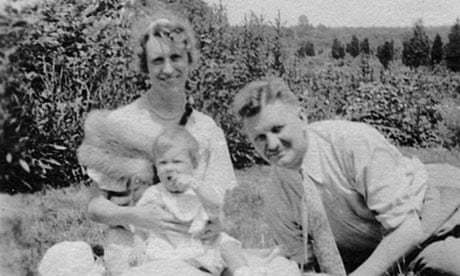
Daddy was written at a time when Plath was grappling with the emotional turmoil of her own life. Her father, Otto Plath, had died when she was eight, leaving a lasting psychological impact. This personal history informs the poem’s depiction of paternal authority as oppressive. Moreover, Plath’s work reflects the broader socio-cultural milieu of the 1950s and 1960s, when women’s roles were largely defined by domesticity and male dominance. The poem can thus be seen as both autobiographical and emblematic of a woman confronting the broader patriarchal structures that govern family, society, and politics.
Summary and Explanation
IGNOU MEG 01 Solved Assignment Q5 Answer 2025–26– Daddy is a 16-stanza poem written in free verse with a confessional tone. Plath uses striking and often shocking imagery to describe her relationship with her father, blending personal grief with historical and cultural allusions. The poem opens with the speaker addressing her father directly:
“You do not do, you do not do
Any more, black shoe”
The metaphor of the “black shoe” conveys oppression, suggesting that the father is an authoritarian figure who has constrained and confined the speaker’s life. The poem progresses through a series of intense images, likening the father to a Nazi and the speaker herself to a Jew, invoking historical atrocities to dramatize the power imbalance and violence inherent in patriarchal control.
Plath then shifts from mourning to defiance, expressing anger and a desire to break free from her father’s symbolic domination:
“Daddy, daddy, you bastard, I’m through”
The poem ends with a climactic declaration of emancipation, indicating the speaker’s attempt to overcome the psychological and societal chains imposed by patriarchal authority.
Protest Against Patriarchy
-
Father as Symbol of Patriarchal Authority
-
In Daddy, the father figure is not merely an individual but a representation of male authority and societal control. Plath exaggerates his dominance and compares him to tyrannical figures, reflecting how patriarchy can infantilize and oppress women. The poem critiques the absolute power men held in both private and public spheres, demonstrating how patriarchal structures can perpetuate fear, subjugation, and psychological trauma.
-
-
Use of Confessional Style as Resistance
-
Plath’s confessional approach transforms personal trauma into a broader critique. By exposing her psychological struggle, she challenges the cultural expectation of female passivity and silence. Her candid and confrontational language, combined with violent and shocking imagery, becomes a literary rebellion against patriarchal norms.
-
-
Metaphorical Violence and Historical Allusions
-
Plath employs metaphors of Nazism and the Holocaust to depict the father’s authoritarianism, equating patriarchal power with historical tyranny. The poem’s hyperbolic references serve to emphasize the systemic oppression faced by women, linking personal experience to universal patterns of male domination.
-
-
Liberation Through Language
-
The final stanzas of the poem depict the speaker’s symbolic victory over her father and patriarchal authority. By addressing the father directly and asserting independence, Plath enacts a verbal rebellion: she transforms her pain into empowerment. The poem concludes with a declaration of freedom, suggesting that confronting patriarchal power requires both acknowledgment of trauma and active resistance.
-
Critical Evaluation
IGNOU MEG 01 Solved Assignment Q5 Answer 2025–26– While Daddy is deeply personal, its critique of patriarchy is unmistakable. Feminist critics, such as Sandra Gilbert and Susan Gubar, interpret the poem as an exploration of the struggle of women to assert identity in a male-dominated world. Plath’s father becomes a metaphor for institutionalized male authority, encompassing familial, social, and cultural dimensions. The poem’s intensity lies in its ability to merge personal grief with political critique, exemplifying how confessional poetry can serve as both personal catharsis and social commentary.
However, some critics argue that the poem’s extreme imagery, particularly the comparison to the Holocaust, risks overshadowing the feminist message. While historically hyperbolic, these metaphors intensify the emotional and psychological dimensions of patriarchal oppression. Furthermore, the poem’s confessional intensity emphasizes subjective experience, illustrating the internalized effects of patriarchal control on women’s psyche.
Daddy also reflects a larger Romantic and modernist literary tradition of exploring rebellion, liberation, and self-assertion. Plath’s poetic strategy combines autobiography, myth, and historical allegory, producing a multi-layered critique of male authority and societal norms.
Themes Related to Patriarchy
-
Oppression and Control: The father’s dominance represents societal and familial patriarchy.
-
Female Resistance: The speaker’s defiance illustrates the struggle for autonomy and self-definition.
-
Psychological Trauma: Patriarchal power leaves lasting effects on the psyche, shaping identity and perception.
-
Liberation and Emancipation: Confrontation with authority leads to catharsis and symbolic freedom.
Conclusion
IGNOU MEG 01 Solved Assignment Q5 Answer 2025–26 – In conclusion, Daddy by Sylvia Plath is undeniably a protest against patriarchy, even as it remains a deeply personal and confessional work. Plath transforms her relationship with her father into a symbol of male authority, using intense imagery, historical allusions, and confrontational language to critique systemic oppression. The poem blends autobiographical trauma with a universal exploration of patriarchal power, highlighting the emotional, psychological, and societal dimensions of female subjugation.
Through Daddy, Plath illustrates that protest against patriarchy is both personal and political. The poem’s confessional style, allegorical complexity, and cathartic resolution underscore the capacity of poetry to confront injustice, articulate resistance, and achieve liberation through language. By addressing the father directly, confronting historical and social forces, and declaring independence, Plath asserts the necessity of female agency and self-determination in the face of oppressive structures.
Ultimately, Daddy exemplifies how poetry can simultaneously serve as personal catharsis and social critique, making it one of the most powerful feminist texts of the 20th century. Plath’s audacious language, visionary imagery, and fearless exploration of pain and liberation cement the poem’s status as a seminal work protesting patriarchal dominance, resonating with readers across generations.