Examine the relationship between literature and politics in the context of Kenyan prose writing and Nigerian theatre .
Literature and Politics in Kenyan Prose & Nigerian Theatre – Literature and politics have always shared a deep and complex relationship in postcolonial African societies. Both act as instruments of expression, resistance, and reform. In Africa, literature has often transcended mere artistic purpose—it has become a vehicle for political commentary, national consciousness, and social transformation. Kenyan prose writing and Nigerian theatre, in particular, stand out as two rich traditions where writers have used artistic forms to interrogate power structures, colonialism, corruption, and the struggle for justice.
While Kenyan prose writers such as Ngũgĩ wa Thiong’o, Grace Ogot, and Meja Mwangi have depicted political realities through narratives of resistance and identity, Nigerian dramatists like Wole Soyinka, Ola Rotimi, and Femi Osofisan have explored politics through performance, satire, and symbolism. Both literary forms reveal how politics infiltrates everyday life and how literature, in turn, becomes a mode of political engagement and liberation.
Kenyan Prose Writing: The Politics of Resistance
Kenyan prose writing has evolved within a socio-political landscape marked by colonial domination, independence struggles, and postcolonial disillusionment. The political history of Kenya—its experience under British rule and subsequent authoritarian regimes—has shaped the themes and purposes of its literature.
1. Colonial and Anti-Colonial Consciousness
Literature and Politics in Kenyan Prose & Nigerian Theatre – The early phase of Kenyan prose reflects the struggle against colonialism and the formation of a national identity. Ngũgĩ wa Thiong’o, Kenya’s most influential novelist, stands as the foremost figure in linking literature to political activism. His novels such as Weep Not, Child (1964), The River Between (1965), and A Grain of Wheat (1967) explore the impact of colonialism on traditional African societies and the psychological conflicts it created among Kenyans torn between modernity and tradition.
In A Grain of Wheat, Ngũgĩ portrays the Mau Mau rebellion not merely as a violent uprising but as a moral and political awakening. The novel examines the betrayal and sacrifice inherent in the fight for independence, suggesting that decolonization is as much an internal process of reclaiming dignity as it is an external political act.
2. Post-Independence Critique
Post-independence Kenya saw the emergence of political corruption, ethnic divisions, and inequality—issues that became central to Kenyan prose. Ngũgĩ’s later works, particularly Petals of Blood (1977), directly attack the neo-colonial ruling class, exposing how the promises of liberation were replaced by exploitation and betrayal. The novel’s depiction of industrialization and capitalist greed becomes a metaphor for Kenya’s moral decay.
Other writers, like Meja Mwangi in Kill Me Quick (1973) and Grace Ogot in The Promised Land (1966), also examine similar disillusionment. Their works portray the marginalization of the poor, urban alienation, and the loss of values in a society struggling with new forms of oppression.
3. The Language Debate and Political Liberation
A significant political dimension in Kenyan literature lies in the question of language. Ngũgĩ’s decision to abandon English and write in his native Gikuyu marked a radical political stance. In his essays, notably Decolonising the Mind (1986), Ngũgĩ argues that language is a carrier of culture and ideology; therefore, using African languages in literature is essential to reclaiming cultural independence.
For Ngũgĩ, writing in indigenous languages challenges the hegemony of colonial thought and empowers the masses, transforming literature into a revolutionary act. Thus, in Kenya, prose writing is not just about storytelling but about resisting imperialism at both linguistic and ideological levels.
Nigerian Theatre: Politics on Stage
Literature and Politics in Kenyan Prose & Nigerian Theatre– In contrast to Kenya’s prose tradition, Nigerian theatre employs performance as a powerful tool of political expression. Theatre in Nigeria has always mirrored the country’s turbulent political evolution—from colonialism and independence to military dictatorship and democracy.
1. Colonial Influence and National Awakening
Early Nigerian theatre drew from indigenous traditions such as the Yoruba traveling theatre, masquerade performances, and ritual drama. With colonial education came Western dramatic forms, which were soon appropriated to express African realities. Playwrights began using the stage as a platform to critique colonial domination and celebrate African identity.
Wole Soyinka, Nigeria’s most prominent dramatist and Nobel laureate, exemplifies this intersection of art and politics. His plays, such as A Dance of the Forests (1960) and The Lion and the Jewel (1959), were written around the time of Nigeria’s independence. They expose the contradictions within the new nation and the dangers of replacing colonial rulers with equally corrupt local elites.
2. Postcolonial Disillusionment and Dictatorship
Literature and Politics in Kenyan Prose & Nigerian Theatre- During Nigeria’s post-independence era, the theatre became a medium for resistance against military regimes and social injustice. Soyinka’s Madmen and Specialists (1971) and A Play of Giants (1984) are biting satires on tyranny and moral decay. These plays reveal how political power degenerates into madness when divorced from ethical responsibility.
Similarly, playwrights like Ola Rotimi in Our Husband Has Gone Mad Again (1977) and Femi Osofisan in Once Upon Four Robbers (1980) use humor, irony, and folk traditions to critique political opportunism, inequality, and corruption. Their works blend entertainment with education, inviting audiences to reflect on the misuse of power.
3. Theatre as Political Mobilization
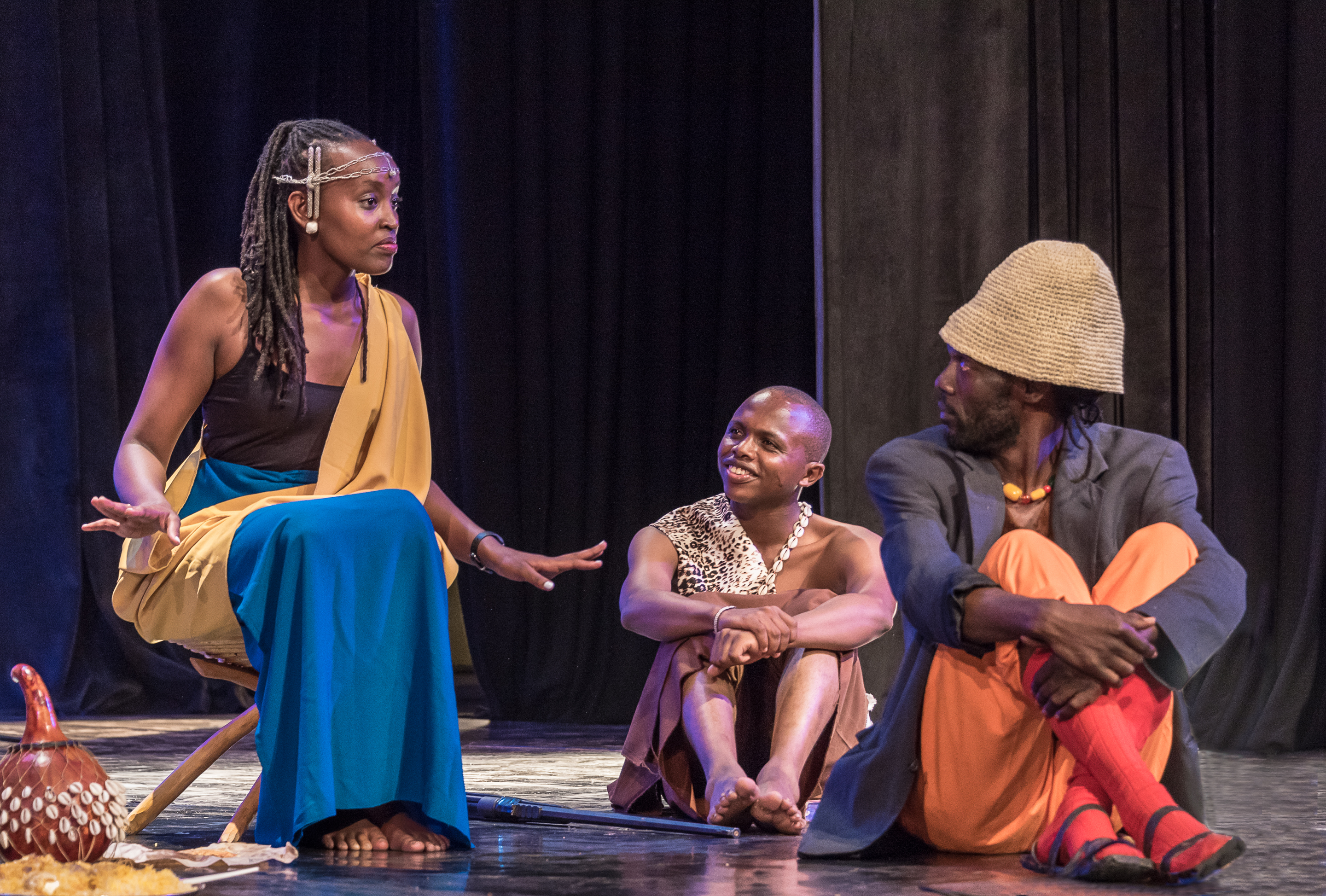
Nigerian theatre has also served as a form of people’s theatre or theatre for development, particularly during the 1970s and 1980s. Performances were staged in villages and marketplaces to raise awareness about political rights, gender equality, and community development. This form of theatre blurred the line between audience and performer, turning drama into a collective act of political consciousness.
The theatre of protest became especially relevant during military rule, when censorship limited free expression. Through allegory and symbolism, playwrights criticized authoritarianism without directly naming the regime. In this way, Nigerian theatre preserved political discourse even in repressive conditions.
Comparative Perspective: Kenyan Prose and Nigerian Theatre
Literature and Politics in Kenyan Prose & Nigerian Theatre– Both Kenyan prose and Nigerian theatre demonstrate how African writers transform literature into a political weapon. However, their approaches differ due to cultural forms and national contexts.
-
Medium and Reach: Kenyan writers primarily use the novel—a reflective, text-based medium suited for exploring inner conflicts and historical memory. Nigerian writers use the stage—a public, collective space that mirrors the immediacy of political action.
-
Focus of Critique: Kenyan prose often emphasizes colonial legacy and class struggle, while Nigerian theatre focuses on leadership failure, corruption, and moral decay in post-independence society.
-
Audience Engagement: Nigerian theatre directly engages with audiences, making political critique participatory. Kenyan prose, though less interactive, provokes intellectual engagement and ideological awareness.
-
Language and Cultural Politics: Both traditions grapple with the politics of language—Kenyan writers through debates over English vs. indigenous languages, and Nigerian dramatists through the use of pidgin, proverbs, and oral performance forms.
Despite these differences, both literatures converge on one central idea: the artist’s responsibility to society. For African writers, literature cannot be detached from politics because art itself is a response to social injustice and the quest for freedom.
Conclusion
Literature and Politics in Kenyan Prose & Nigerian Theatre– The relationship between literature and politics in Kenyan prose and Nigerian theatre is one of mutual influence and resistance. In both contexts, writers use their art not only to depict reality but also to challenge and transform it.
Kenyan novelists like Ngũgĩ wa Thiong’o expose the betrayal of independence and the enduring impact of colonialism, using fiction as a revolutionary tool. Nigerian playwrights like Wole Soyinka and Ola Rotimi transform the stage into a space for moral reflection and political dissent.
Ultimately, both traditions reaffirm that African literature is inherently political—born from struggle, nurtured by resistance, and aimed at envisioning a more just and humane society. Through words and performance, Kenyan prose and Nigerian theatre continue to remind us that the pen and the stage remain powerful instruments in the fight against oppression and for the reclamation of human dignity