
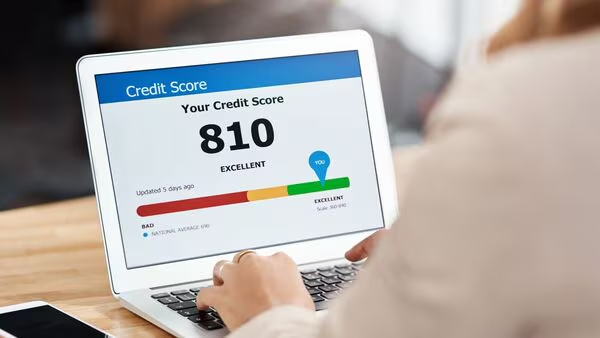
How UK Students Can Build a Credit Score Fast and Safely
How UK Students Can Build A Credit Score Fast And Safely For many UK students, the idea of having a “credit score” feels distant and unimportant. After all, when you are focused on studies, part-time work, and social life, long-term financial planning rarely feels urgent. However, the truth is that your credit score can affect some of the most important moments of your future—renting your first flat, getting a mobile phone contract, buying a car, or even qualifying for a mortgage.
The good news is that students in the UK can build a strong credit score faster and more safely than most people realise, even with a low income. This complete guide explains exactly how UK students can build credit the smart, legal, and risk-free way.
What Is a Credit Score and Why It Matters for Students?
How UK Students Can Build A Credit Score Fast And Safely A credit score is a number that shows how trustworthy you are as a borrower. Lenders, landlords, phone companies, and banks use it to decide whether to approve you and what interest rate to offer. In the UK, your score is tracked by three major credit agencies: Experian, Equifax, and TransUnion.
As a student, your credit score matters because it affects:
-
Student bank accounts upgrading later
-
Mobile phone and broadband contracts
-
Car finance
-
Rental applications
-
Personal loans in the future
-
Mortgage approval after graduation
A strong credit score gives you lower interest rates, better offers, and more financial freedom. A poor score blocks opportunities.
How Credit Scores Are Calculated in the UK
How UK Students Can Build A Credit Score Fast And Safely Your UK credit score is built using several factors:
-
Payment history (most important factor)
-
Credit utilisation (how much of your limit you use)
-
Length of credit history
-
Types of credit used
-
Number of applications (hard searches)
-
Address stability and electoral roll status
Students often start with no credit history at all, which is not bad—but it does mean lenders cannot judge your reliability yet. Your goal is to create positive data quickly without falling into debt.
Step 1: Open a UK Student Bank Account
The very first step to building credit safely is opening a UK-based student current account. These accounts are designed for low income, offer overdraft facilities, and act as your financial foundation.
Why this matters:
-
Shows financial stability
-
Builds transaction history
-
Helps future credit applications
-
Makes it easier to register on the electoral roll
Make sure your bank account is always used responsibly. Avoid bounced payments and unauthorised overdrafts as these harm your credit record.
Step 2: Register on the Electoral Roll (Huge Credit Boost)
How UK Students Can Build A Credit Score Fast And Safely This is one of the fastest and safest ways for UK students to improve their credit score.
Why it matters:
-
Confirms your identity
-
Shows address stability
-
Improves lender trust instantly
-
Boosts approval chances
Even if you live in student accommodation or shared housing, you can still register at your current address. This step alone can significantly improve your score within weeks.
Step 3: Get a Student or Credit-Builder Credit Card
A student credit card or credit-builder card is one of the safest tools for building credit—when used correctly.
How to use a credit card safely as a student:
-
Only spend small amounts
-
Always repay the full balance every month
-
Never miss a payment
-
Keep usage under 30% of the limit
-
Never withdraw cash on a credit card
Used properly, a credit card creates perfect payment history, which is the strongest credit-building signal. Used badly, it can trap you in debt for years—so discipline is everything.
Step 4: Use Direct Debits for Regular Bills
How UK Students Can Build A Credit Score Fast And Safely Paying regular bills through direct debit is one of the safest long-term strategies for building credit.
Good bills to use:
-
Mobile phone contracts
-
Student accommodation utilities
-
Streaming subscriptions
-
Gym memberships
-
Broadband
Each successful monthly payment strengthens your payment history and shows lenders that you can manage financial commitments responsibly.
Step 5: Keep Credit Utilisation Low
Credit utilisation is the percentage of your available credit you are using. This matters more than most students realise.
For example:
-
Card limit: £1,000
-
Safe usage: Under £300
-
Dangerous usage: Over £700
High utilisation signals financial stress to lenders, even if you pay on time. Low utilisation signals control and stability.
Step 6: Avoid Too Many Credit Applications
How UK Students Can Build A Credit Score Fast And Safely Every time you apply for credit, a hard search appears on your report. Too many applications in a short time can reduce your score.
Students should avoid applying for:
-
Multiple credit cards at once
-
Store finance
-
Buy Now Pay Later accounts
-
Mobile contracts from multiple providers
Instead, space applications at least 3–6 months apart to protect your score.
Step 7: Use Buy Now, Pay Later (BNPL) With Caution
Many UK students use Klarna, Clearpay, or PayPal Credit. While some BNPL services now report to credit agencies, late payments can seriously damage your score.
Rules for safe BNPL use:
-
Only use it when money is already available
-
Never stack multiple BNPL purchases
-
Always repay before the due date
-
Avoid using BNPL as a lifestyle tool
BNPL should never replace budgeting discipline.
Step 8: Check Your Credit Report Regularly (Free)
How UK Students Can Build A Credit Score Fast And Safely Students should check their credit report at least every 3–4 months to:
-
Spot mistakes
-
Detect fraud early
-
Track improvement
-
Correct address errors
-
Remove outdated links
Many UK services allow free lifetime access to your credit report. Monitoring alone helps improve financial awareness.
Step 9: Avoid These Credit-Killing Student Mistakes
Many students damage their credit score early without realising it. The most common mistakes include:
-
Missing mobile phone payments
-
Ignoring BNPL repayment deadlines
-
Maxing out credit cards
-
Using overdrafts without control
-
Applying for too many cards
-
Letting accommodation bills go unpaid
-
Acting as guarantor for friends
Even one missed payment can stay on your record for six years.

How Fast Can UK Students Build a Credit Score?
How UK Students Can Build A Credit Score Fast And Safely With correct habits, UK students can build visible credit improvement within:
-
1–2 months: Electoral roll + first payments
-
3–6 months: Solid positive payment history
-
12 months: Strong beginner-level credit profile
-
2–3 years: Excellent borrower profile
Speed depends on consistency, not income.
How Credit Affects Your Life After Graduation
A strong student-built credit score helps you:
-
Rent flats without guarantors
-
Get approved for car finance
-
Qualify for lower loan interest
-
Improve mortgage eligibility years earlier
-
Access better business funding
-
Save thousands in long-term interest
Financial life after university becomes easier and cheaper with a strong early credit foundation.
Can International Students Build UK Credit?
How UK Students Can Build A Credit Score Fast And Safely Yes. International students can build UK credit if they:
-
Open a UK bank account
-
Register on the electoral roll (if eligible)
-
Use UK credit products
-
Maintain UK address stability
Your overseas credit history does not usually transfer, so building fresh UK credit is essential.
Is It Safe to Build Credit Without Income?
Yes, if done correctly. Credit score growth comes from:
-
On-time payments
-
Low balances
-
Stable identity data
Not from high income. Even part-time income or parental support is enough when spending is controlled.
Smart Student Credit-Building Strategy (Summary Plan)
Week 1:
-
Open student bank account
-
Register on electoral roll
Month 1:
-
Apply for one student or credit-builder card
-
Set up 1–2 direct debits
Month 2–6:
-
Pay everything on time
-
Keep balances low
-
Avoid new applications
Month 6–12:
-
Track score growth
-
Maintain stability
-
Upgrade credit responsibly
When Students Should Avoid Credit Entirely
How UK Students Can Build A Credit Score Fast And Safely Avoid all credit if:
-
You already struggle with money management
-
You rely on borrowing for food or rent
-
You frequently miss payments
-
You feel tempted by impulsive spending
In such cases, budgeting skills should come before credit tools.
Conclusion
How UK Students Can Build A Credit Score Fast And Safely Building a credit score as a UK student does not require high income, risky debt, or financial pressure. It requires consistency, discipline, and smart early decisions. By registering on the electoral roll, using a student credit card responsibly, paying regular bills on time, keeping balances low, and avoiding impulsive borrowing, students can safely build a powerful credit profile before graduation.
A strong credit score is not just a number—it is a financial passport that unlocks better housing, cheaper loans, and long-term financial freedom. The students who master credit early rarely struggle financially later in life.
FAQs
Q1. Can students really build credit without a full-time job?
Yes. Payment behaviour matters more than income level.
Q2. Do overdrafts help build credit?
Only if used responsibly and repaid on time. Unauthorised overdrafts harm credit.
Q3. Does student loan repayment affect credit score?
No. Student loans do not appear on your credit report.
Q4. How many credit cards should a student have?
One is enough for safe credit building.
Q5. Does missing one payment ruin my credit?
It can significantly damage your score for up to six years.
Q6. How long does it take to get a “good” credit score?
Usually between 6 and 18 months of perfect payments.
Q7. Are credit builder cards expensive?
Their interest rates are higher—but interest is avoidable if you repay in full each month.
READ ALSO :-

