Examine Saleem’s role in the novel Midnight’s Children
ANSWER :
Examine Saleem’s role in the novel Midnight’s Children – Salman Rushdie’s Midnight’s Children (1981) is one of the most celebrated works of postcolonial literature. It won the Booker Prize in 1981 and later the Booker of Bookers, recognized as the best novel to have received the award in the first twenty-five years. At the heart of this rich and complex narrative stands its protagonist and narrator, Saleem Sinai, a character whose life is inextricably bound to the destiny of India itself. Through Saleem, Rushdie crafts a unique blend of history, magic, and personal storytelling, presenting a metaphorical tale of India’s journey from colonialism to independence and beyond. Examining Saleem’s role, therefore, means exploring how he functions as a narrator, a historical allegory, and a symbol of India’s fragmented identity.
1. Saleem as the Central Narrator and Storyteller
Saleem Sinai is the first-person narrator of Midnight’s Children, recounting his life story from birth to adulthood. His narrative begins dramatically:
“I was born in the city of Bombay… on the stroke of midnight on August 15, 1947.”
This date marks the birth of independent India, making Saleem’s existence immediately symbolic. As a narrator, he constantly blurs the line between personal and national history. His storytelling style is digressive, fragmented, and self-conscious. He frequently addresses his listener, Padma, breaking the fourth wall and commenting on his own storytelling. Through this metafictional technique, Rushdie presents Saleem as an unreliable narrator, one whose memory and imagination intertwine.
Saleem’s narrative technique mirrors the chaos and plurality of postcolonial India. He admits that his memory “plays tricks” and that he sometimes confuses the order of events, but insists that “to understand me, you’ll have to swallow a world.” His act of storytelling thus becomes an attempt to impose order on the chaos of history and identity. Saleem’s fragmented narration reflects both his own disintegration and the fractured nature of the nation he represents.
2. Saleem as the Allegorical Figure of India
Examine Saleem’s role in the novel Midnight’s Children– Saleem’s life parallels the history of modern India. Born at the very moment of Independence, he becomes a living metaphor for the nation itself. His physical and psychological growth mirrors the country’s transition through key historical events—Partition, wars with Pakistan, the linguistic reorganization of states, and the Emergency under Indira Gandhi. Just as India struggles to define its identity amidst political and cultural upheavals, Saleem struggles to understand his own origins and sense of self.
The symbolism of his birth is further deepened by the “baby-switching” episode in the hospital, where Saleem, a Muslim child from a wealthy family, is exchanged with Shiva, a Hindu child born in poverty. This reversal of destinies captures the arbitrary and ironic forces that shape postcolonial identities. It also questions the role of fate versus free will, suggesting that individuals, like nations, are shaped as much by accidents of birth as by deliberate choices. Saleem’s mixed heritage—ethnically, religiously, and culturally—mirrors India’s diversity and hybridity.
His frequent illnesses, nosebleeds, and physical disintegration later in the novel further symbolize the fragmentation of India during the post-independence years. Saleem’s crumbling body parallels a nation struggling under internal divisions and political corruption. His eventual breakdown during the Emergency reflects the silencing and suppression of voices during Indira Gandhi’s authoritarian rule.
3. Saleem and the Midnight’s Children: Symbol of Collective Identity
One of the novel’s most imaginative elements is the Midnight’s Children Conference—a group of 1,001 children born in the first hour of India’s independence, all endowed with magical powers. Saleem, who possesses telepathic abilities, becomes the medium through which they communicate. This collective represents the infinite diversity of India—different religions, languages, regions, and social classes—all connected through a shared moment of birth.
Saleem’s telepathy symbolizes the ideal of national unity and communication across differences. He attempts to bring the children together, to create a kind of democratic assembly of voices. Yet, like India’s own attempts at unity, this project eventually fails. The Midnight’s Children quarrel, divide, and ultimately dissolve as political and social realities overpower idealistic dreams. Saleem’s inability to hold them together reflects the failure of Nehruvian secularism and the challenges of maintaining harmony in a pluralistic society.
Furthermore, the contrast between Saleem and Shiva—the two main midnight’s children—highlights a deeper conflict. While Saleem represents the spirit of imagination, memory, and idealism, Shiva embodies physical power, violence, and realism. Their opposition can be read as the struggle between moral vision and brute force in India’s political history.
4. Saleem’s Personal Identity Crisis
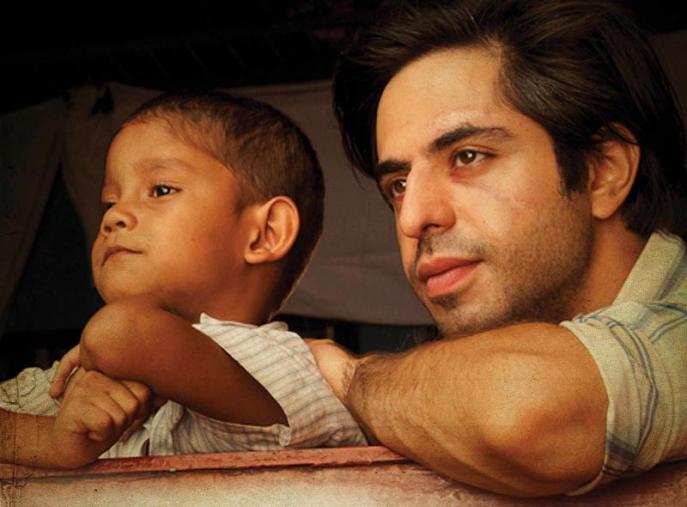
Examine Saleem’s role in the novel Midnight’s Children- Saleem’s identity is uncertain and unstable throughout the novel. The revelation that he is not biologically the child of Amina and Ahmed Sinai but of a poor Hindu woman and an Englishman destabilizes his sense of self. This confusion mirrors India’s own struggle to define its identity after centuries of colonial rule and religious conflict. Just as Saleem grapples with being neither fully Muslim nor fully Indian nor fully British, the nation wrestles with questions of what it means to be Indian in a multi-ethnic, multi-religious state.
His recurring loss of memory, particularly during the war with Pakistan, further symbolizes the nation’s tendency to forget or rewrite its past. When Saleem regains his memory, he reconstructs his story, much as India continually reconstructs its history. His journey is one of rediscovery and self-reinvention, which reflects the broader process of national self-definition.
5. Saleem as a Victim and Witness of History
Throughout Midnight’s Children, Saleem acts as both participant and witness in historical events. From the Partition riots to the Bangladesh Liberation War, and from the linguistic movements to the Emergency, Saleem’s life intersects with nearly every major political event in post-independence South Asia. He often describes himself as being “handcuffed to history,” suggesting that he cannot escape the weight of the national narrative.
This role of a witness allows Rushdie to reinterpret history from a personal, subjective perspective. Through Saleem’s eyes, we see how historical forces affect individual lives, families, and communities. Rushdie challenges the objectivity of official history, presenting instead a “chutnified” version—spicy, mixed, and imperfect but alive with personal memory. Saleem’s act of preserving his story by pickling it, literally and metaphorically, at the novel’s end reinforces this theme. His narrative becomes a jar of memories, preserving the taste of a complex and multifaceted past.
6. Saleem as a Symbol of Postcolonial Hybridity
Examine Saleem’s role in the novel Midnight’s Children– Saleem embodies the concept of hybridity that Homi K. Bhabha identifies as central to postcolonial identity. His mixed parentage, multilingual background, and exposure to different cultures make him a product of India’s historical and cultural fusion. His telepathic ability to connect minds reflects the intermixing of traditions and ideas in a postcolonial world.
Moreover, his narrative voice blends multiple styles—myth, magic, autobiography, and history—mirroring the hybrid form of the novel itself. Rushdie uses Saleem’s fragmented narration to challenge Western literary realism and to assert an alternative way of representing truth—through magical realism. Saleem’s hybridity, therefore, is not just thematic but structural, shaping the novel’s entire form and tone.
7. Saleem’s Tragic Decline and Legacy
By the end of the novel, Saleem is physically and mentally disintegrated, symbolizing the disillusionment that followed the idealism of Independence. The Emergency period, during which the Midnight’s Children are sterilized, represents the destruction of democratic ideals and the suppression of individuality. Saleem’s ultimate fate—his anticipated fragmentation into “six hundred million pieces”—is both tragic and symbolic. It reflects the loss of unity, the decay of moral values, and the fracturing of the national dream.
Yet, Saleem’s act of narrating his story gives him a kind of immortality. Even as he acknowledges his coming dissolution, he preserves his memory and that of his generation through storytelling. In this sense, Saleem’s role transcends his own life; he becomes the custodian of collective memory, ensuring that the story of his nation is remembered, however imperfectly.
Conclusion
Examine Saleem’s role in the novel Midnight’s Children– In Midnight’s Children, Saleem Sinai is more than a protagonist—he is the novel’s structural and symbolic core. Through him, Salman Rushdie fuses the personal and the political, the magical and the historical, the real and the imagined. Saleem’s life mirrors the tumultuous journey of postcolonial India, his fragmented self reflecting the fractured identity of a newly independent nation. As narrator, allegory, and symbol, Saleem gives voice to the complexity of history and the struggle to find meaning in chaos. His story, filled with contradictions, digressions, and miracles, ultimately celebrates the resilience of memory and imagination in the face of disintegration. In telling his own story, Saleem tells the story of India itself.