
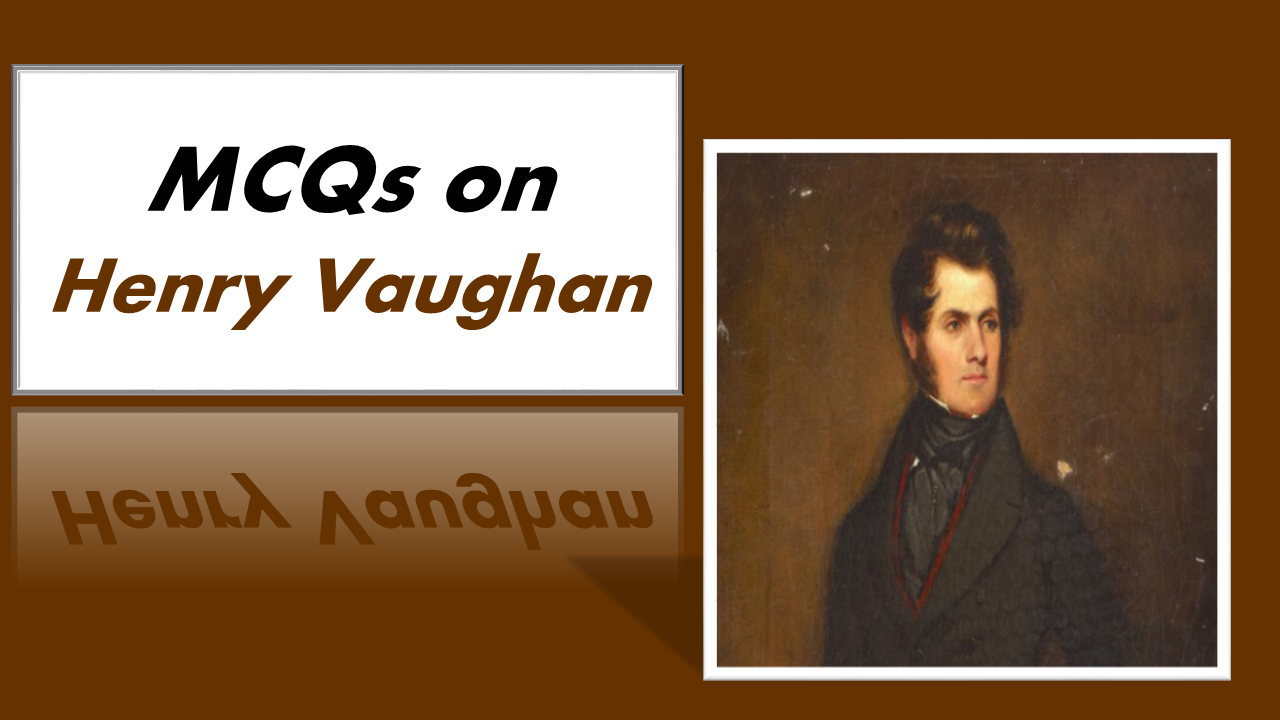
MCQs on Henry Vaughan
1. What is the birthplace of Henry Vaughan?
a. London
b. Oxford
c. Swansea
d. Edinburgh
2. In which century did Henry Vaughan live?
a. 16th century
b. 17th century
c. 18th century
d. 19th century
3. Henry Vaughan is often associated with which literary movement?
b. Metaphysical poetry
c. Victorian literature
d. Renaissance
4. Which of Vaughan’s famous works is considered a major collection of his poems?
a. “Silex Scintillans”
b. “The Retreat”
c. “The World”
d. “Olor Iscanus”
5. Vaughan’s poetry is known for its exploration of what themes?
a. Nature and Romantic love
b. Religious and metaphysical themes
c. Political and social issues
d. Satirical and humorous elements
6. What is the significance of the term “Silex Scintillans” in Vaughan’s work?
a. It means “Sparkling Flint”
b. It is a Latin phrase for “Shining Stone”
c. It translates to “The Glowing Rock”
d. It refers to a collection of his religious poems
7. Which of the following poets had a significant influence on Henry Vaughan’s work?
a. John Donne
b. William Wordsworth
c. John Milton
d. Samuel Taylor Coleridge
8. Vaughan’s poetry often reflects his background in which profession?
a. Lawyer
b. Physician
c. Clergyman
d. Soldier
9. In “The Retreat,” what does Vaughan describe as a place of spiritual refuge and meditation?
a. A monastery
b. A library
c. A church
d. Nature
10. Which of Vaughan’s poems is often cited as an expression of his mystical experiences?
a. “The World”
b. “Man”
c. “The Night”
d. “The Retreat”
11. What is the title of Vaughan’s poem that reflects on the transience of life and the fleeting nature of beauty?
a. “The Retreat”
b. “The Night”
c. “Man”
d. “The World”
12. Which religious denomination did Henry Vaughan adhere to?
a. Catholicism
b. Anglicanism
c. Puritanism
d. Quakerism
13. What is the central theme of Vaughan’s poem “The Night”?
a. Nature
b. Love
c. Death
d. Spirituality
14. In Vaughan’s poem “Man,” what does he explore about human nature?
a. The pursuit of knowledge
b. The struggle with sin
c. The power of imagination
d. The quest for eternal life
15. Which of Vaughan’s works is often considered a spiritual autobiography?
a. “The World”
b. “Silex Scintillans”
c. “The Retreat”
d. “Olor Iscanus”
16. Vaughan’s poetry is characterized by a blending of what literary elements?
a. Satire and humor
b. Metaphysical and devotional elements
c. Epic and dramatic elements
d. Realism and naturalism
17. What does Vaughan emphasize in his poem “The World” regarding worldly pursuits?
a. Their fleeting nature
b. Their eternal significance
c. Their material rewards
d. Their intellectual value
18. Vaughan’s work is often associated with the concept of “Metaphysical Poetry,” along with poets like:
a. John Milton and Andrew Marvell
b. John Donne and George Herbert
c. William Wordsworth and Samuel Taylor Coleridge
d. Percy Bysshe Shelley and John Keats
19. In “The Retreat,” what does Vaughan describe as a place of spiritual refuge and meditation?
a. A monastery
b. A library
c. A church
d. Nature
20. What is the meaning of the term “Olor Iscanus,” which Vaughan used as the title for one of his works?
a. Swan of Usk
b. Song of Isca
c. Elegy for Iscanus
d. Poems of Iscanus
Also Read-
21. Vaughan’s poem “The World” is often seen as a meditation on:
a. The beauty of nature
b. The transience of life
c. The complexities of love
d. The challenges of war
22. Which of the following is a common theme in Vaughan’s religious poetry?
a. Nature as a source of divine inspiration
b. Critique of organized religion
c. Exploration of atheism
d. Celebration of worldly pleasures
23. What does Vaughan explore in his poem “Peace”?
a. The horrors of war
b. The quest for inner tranquility
c. Political unrest
d. Nature’s destructive forces
24. Which literary device is commonly found in Vaughan’s metaphysical poetry?
a. Sonnet form
b. Conceit
c. Blank verse
d. Epigram
25. What is the meaning of the term “Silex Scintillans” in Vaughan’s poetry?
a. Shining Rock
b. Sparkling Flint
c. Gleaming Stone
d. Radiant Pebble
26. Vaughan’s religious poems often reflect a tension between:
a. Faith and doubt
b. Love and hatred
c. Joy and sorrow
d. Nature and civilization
27. In “The Retreat,” what does Vaughan contrast with the noise and busyness of the world?
a. Silence and solitude
b. Music and celebration
c. Chaos and confusion
d. War and conflict
28. Vaughan’s poetry is known for its rich use of:
a. Allegory
b. Satire
c. Irony
d. Realism
29. What is the meaning of the term “Silex Scintillans” in Vaughan’s poetry?
a. Shining Rock
b. Sparkling Flint
c. Gleaming Stone
d. Radiant Pebble
30. Which of Vaughan’s poems expresses a contemplation on the natural world as a reflection of divine creation?
a. “The Retreat”
b. “The Night”
c. “Man”
d. “The World”
31. Vaughan’s poetry often reflects a deep appreciation for:
a. Urban life
b. Country life
c. Maritime adventures
d. Scientific discoveries
32. Which of Vaughan’s poems is known for its exploration of the theme of divine love?
a. “The Retreat”
b. “The Night”
c. “Man”
d. “The World”
33. What is the central theme of Vaughan’s poem “The Night”?
a. Nature
b. Love
c. Death
d. Spirituality
34. In Vaughan’s poem “Man,” what does he explore about human nature?
a. The pursuit of knowledge
b. The struggle with sin
c. The power of imagination
d. The quest for eternal life
35. Which literary device is commonly found in Vaughan’s metaphysical poetry?
a. Sonnet form
b. Conceit
c. Blank verse
d. Epigram
36. Vaughan’s religious poems often reflect a tension between:
a. Faith and doubt
b. Love and hatred
c. Joy and sorrow
d. Nature and civilization
37. What is the significance of the term “Silex Scintillans” in Vaughan’s work?
a. It means “Sparkling Flint”
b. It is a Latin phrase for “Shining Stone”
c. It translates to “The Glowing Rock”
d. It refers to a collection of his religious poems
38. Which of the following poets had a significant influence on Henry Vaughan’s work?
a. John Donne
b. William Wordsworth
c. John Milton
d. Samuel Taylor Coleridge
39. What is the meaning of the term “Olor Iscanus,” which Vaughan used as the title for one of his works?
a. Swan of Usk
b. Song of Isca
c. Elegy for Iscanus
d. Poems of Iscanus
40. Which of Vaughan’s poems is often cited as an expression of his mystical experiences?
a. “The World”
b. “Man”
c. “The Night”
d. “The Retreat”
41. What is the title of Vaughan’s poem that reflects on the transience of life and the fleeting nature of beauty?
a. “The Retreat”
b. “The Night”
c. “Man”
d. “The World”
42. In “The Retreat,” what does Vaughan describe as a place of spiritual refuge and meditation?
a. A monastery
b. A library
c. A church
d. Nature
43. Which of Vaughan’s works is often considered a spiritual autobiography?
a. “The World”
b. “Silex Scintillans”
c. “The Retreat”
d. “Olor Iscanus”
44. Vaughan’s poetry is characterized by a blending of what literary elements?
a. Satire and humor
b. Metaphysical and devotional elements
c. Epic and dramatic elements
d. Realism and naturalism
45. What does Vaughan emphasize in his poem “The World” regarding worldly pursuits?
a. Their fleeting nature
b. Their eternal significance
c. Their material rewards
d. Their intellectual value
46. Vaughan’s work is often associated with the concept of “Metaphysical Poetry,” along with poets like:
a. John Milton and Andrew Marvell
b. John Donne and George Herbert
c. William Wordsworth and Samuel Taylor Coleridge
d. Percy Bysshe Shelley and John Keats
47. In “The Retreat,” what does Vaughan contrast with the noise and busyness of the world?
a. Silence and solitude
b. Music and celebration
c. Chaos and confusion
d. War and conflict
48. Vaughan’s poetry is known for its rich use of:
a. Allegory
b. Satire
c. Irony
d. Realism
49. What is the meaning of the term “Silex Scintillans” in Vaughan’s poetry?
a. Shining Rock
b. Sparkling Flint
c. Gleaming Stone
d. Radiant Pebble
50. Which of Vaughan’s poems expresses a contemplation on the natural world as a reflection of divine creation?
a. “The Retreat”
b. “The Night”
c. “Man”
d. “The World”
Answer
1. c. Swansea
2. b. 17th century
3. b. Metaphysical poetry
4. a. “Silex Scintillans”
5. b. Religious and metaphysical themes
6. b. It is a Latin phrase for “Shining Stone”
7. a. John Donne
8. c. Clergyman
9. d. Nature
10. c. “The Night”
11. d. “The World”
12. b. Anglicanism
13. a. Nature
14. b. The struggle with sin
15. a. “The World”
16. b. Metaphysical and devotional elements
17. a. Their fleeting nature
18. b. John Donne and George Herbert
19. d. Nature
20. a. Swan of Usk
21. b. The transience of life
22. a. Nature as a source of divine inspiration
23. b. The quest for inner tranquility
24. b. Conceit
25. b. Sparkling Flint
26. a. Faith and doubt
27. a. Silence and solitude
28. a. Allegory
29. b. Sparkling Flint
30. a. “The Retreat”
31. b. Country life
32. a. “The Retreat”
33. c. Death
34. b. The struggle with sin
35. b. Conceit
36. a. Faith and doubt
37. b. It is a Latin phrase for “Shining Stone”
38. a. John Donne
39. a. Swan of Usk
40. c. “The Night”
41. b. “The Night”
42. d. Nature
43. c. “The Retreat”
44. b. Metaphysical and devotional elements
45. a. Their fleeting nature
46. b. John Donne and George Herbert
47. a. Silence and solitude
48. a. Allegory
49. b. Sparkling Flint
50. d. “The World”

