

How does Dickens’s novel Great Expectations engage with the theme of upward social mobility and self-improvement
The classic book “Great Expectations” by Charles Dickens explores the themes of self-improvement and upward social mobility in great detail. The main character, Pip, is followed in this 1860 novel as he develops from a humble apprentice blacksmith to a wealthy and well-respected nobleman. Through Pip’s journey, Dickens deftly shows the social dynamics and human growth associated with the pursuit of upward social mobility and self-improvement.
Social Mobility in Victorian England:
To understand how “Great Expectations” engages with the theme of upward social mobility, it is essential to first consider the socio-economic context of Victorian England. The 19th century was a period of significant societal changes, marked by industrialization, urbanization, and a rapidly evolving class structure. This era saw the emergence of the Industrial Revolution, which led to the growth of urban centers and the transformation of traditional agrarian communities into industrialized cities.
Also Read-
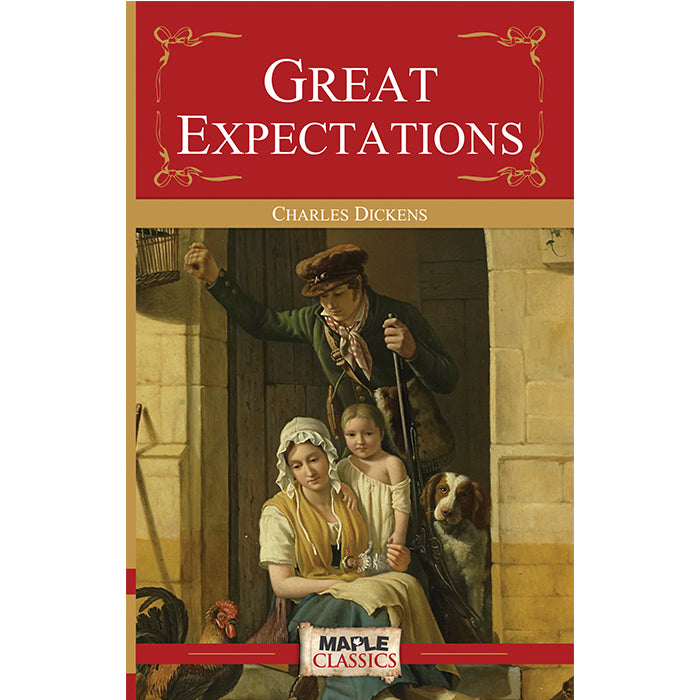
Great Expectations by Charles Dickens
Discuss the theme of disillusionment in F. Scott Fitzgerald’s The Great Gatsby
The class structure in Victorian England was highly hierarchical, with clear distinctions between the upper, middle, and working classes. Social mobility, particularly upward mobility, was not easy to attain due to rigid class boundaries. However, it was not entirely impossible, and individuals like Pip could aspire to improve their social standing through various means, such as education, employment, or inheritance.
Pip’s Journey and Self-Improvement:
The novel’s protagonist, Pip, starts his journey from a lower-class background in a rural village. His early life is marked by poverty and hardship, and his aspiration for social mobility is ignited when he receives an unexpected inheritance from an anonymous benefactor. This financial windfall elevates Pip to a higher economic and social class. His journey towards upward social mobility can be divided into several key stages:
- Education and Aspiration: Pip’s first opportunity for self-improvement comes through education. He is introduced to a world beyond the marshes when he is sent to the home of the wealthy spinster Miss Havisham to be a playmate for her adopted daughter, Estella. This exposure to a different way of life awakens Pip’s aspirations for upward mobility, causing him to become dissatisfied with his current status.
- Great Expectations: Pip’s life takes a significant turn when he learns of his “great expectations” – an inheritance that promises him wealth and the prospect of becoming a gentleman. This newfound wealth represents not only economic improvement but also social elevation.
- Moral and Ethical Challenges: Pip’s pursuit of self-improvement and upward mobility leads him to make several moral and ethical compromises. He becomes ashamed of his working-class origins and distances himself from Joe Gargery, his loyal brother-in-law. Pip’s transformation into a “gentleman” is accompanied by a sense of guilt and unease as he becomes more conscious of the divide between his old and new life.
- Social Success and Disillusionment: Pip’s journey culminates in his successful integration into London’s upper echelons. He acquires a taste for luxury, falls into debt, and becomes estranged from Joe and Biddy. However, his social success is accompanied by disillusionment. He realizes that his expectations were manipulated by a mysterious benefactor, not as an act of charity, but as part of a vindictive experiment by Miss Havisham. His self-improvement and social mobility have been built on false pretenses.
- Return to Humble Beginnings: Ultimately, Pip comes to understand the value of his true friends and the importance of personal character and virtue. He experiences a moral transformation and seeks redemption by returning to his humble beginnings. This marks a different kind of self-improvement, one that is rooted in self-awareness and moral growth.
Other Characters and Social Mobility:
Apart from Pip, other characters in the novel also engage with the theme of social mobility and self-improvement in various ways:
- Estella: Raised by Miss Havisham to be a tool of revenge, Estella is beautiful and educated but emotionally distant. Her upbringing is a form of social engineering, as she is groomed to break men’s hearts. However, she, too, undergoes a transformation in her pursuit of self-improvement and ultimately seeks to find her own identity.
- Miss Havisham: Miss Havisham is a tragic character whose attempt to achieve self-improvement and social mobility through marriage leads to her ruin. She becomes a recluse and uses Estella as an instrument of revenge against men. Her obsession with social status ultimately destroys her and her surroundings.
- Joe Gargery: Pip’s brother-in-law, Joe, remains a steadfast, honest, and humble character throughout the novel. He represents the working class and serves as a moral anchor for Pip. Despite his limited social mobility, Joe is portrayed as a character with immense personal integrity.
- Orlick and Compeyson: These characters, in contrast to Pip, are involved in criminal activities. Orlick represents a lower class figure who seeks upward social mobility through violence and deceit, while Compeyson, a conman, manipulates his social connections to achieve personal gain.
Critique of Social Mobility:
While “Great Expectations” engages with the theme of upward social mobility and self-improvement, it also offers a critical perspective on the pursuit of these goals. Dickens uses Pip’s experiences to highlight the moral and ethical costs associated with the desire for social advancement. The novel suggests that such aspirations, when driven solely by external expectations and material gain, can lead to disillusionment and moral degradation.
Dickens also challenges the notion that a person’s value is exclusively based on their social class. Pip is not inherently a better person as a result of his makeover into a gentleman. In the end, his self-awareness and moral development are what bring him happiness and salvation.
Conclusion
In Charles Dickens’ “Great Expectations,” the theme of upward social mobility and self-improvement is intricately woven into the narrative. Through the journey of its protagonist, Pip, the novel explores the complexities, challenges, and moral dilemmas associated with the pursuit of social advancement. The socio-economic context of Victorian England provides a backdrop for understanding the intricacies of class distinctions and the opportunities for personal transformation.
Pip’s transformation from a working-class orphan to a “gentleman” reflects the societal dynamics of his time, where the acquisition of wealth and social status was a driving aspiration for many. However, Dickens’ narrative also serves as a cautionary tale, illustrating the potential moral and ethical compromises individuals may make in their pursuit of social mobility.
The novel does not merely celebrate the achievement of social success but underscores the importance of self-awareness, moral growth, and the recognition of one’s true values. Pip’s journey from disillusionment to redemption highlights the transformative power of personal character and the pitfalls of valuing social status above all else.
In the end, “Great Expectations” provides an insightful examination of human ambition, moral integrity, and the ethical ramifications of aiming for a higher social class. It is still regarded as a classic piece of writing that has a lasting impact on readers and provides insightful understanding of the difficulties involved in social mobility and self-improvement.
FAQ.
What is the significance of the title “Great Expectations” in the novel?
The title “Great Expectations” reflects the central theme of the novel, both in the literal sense of Pip’s unexpected inheritance and in the broader context of the characters’ aspirations for social mobility and self-improvement.
How does Pip’s pursuit of social mobility affect his relationships with other characters in the novel?
Pip’s pursuit of social mobility leads to strained relationships with characters like Joe Gargery and Biddy, as he becomes ashamed of his working-class origins. His relationships with Estella and Miss Havisham are also influenced by his aspirations.
What moral dilemmas does Pip face on his journey towards self-improvement and social mobility?
Pip grapples with moral dilemmas such as distancing himself from his humble beginnings, feeling ashamed of his family, and compromising his principles in his quest for social advancement. He also faces the moral implications of his benefactor’s intentions.
How does Dickens critique the pursuit of social mobility in “Great Expectations”?
Dickens critiques the pursuit of social mobility by highlighting the moral and ethical costs associated with it. He suggests that material gain and external expectations can lead to disillusionment and moral degradation.
What role does the socio-economic context of Victorian England play in the novel’s exploration of social mobility?
The socio-economic context of Victorian England serves as the backdrop for understanding the class distinctions and opportunities for personal transformation. It underscores the rigid class boundaries and the challenges individuals faced in their pursuit of social advancement.

