
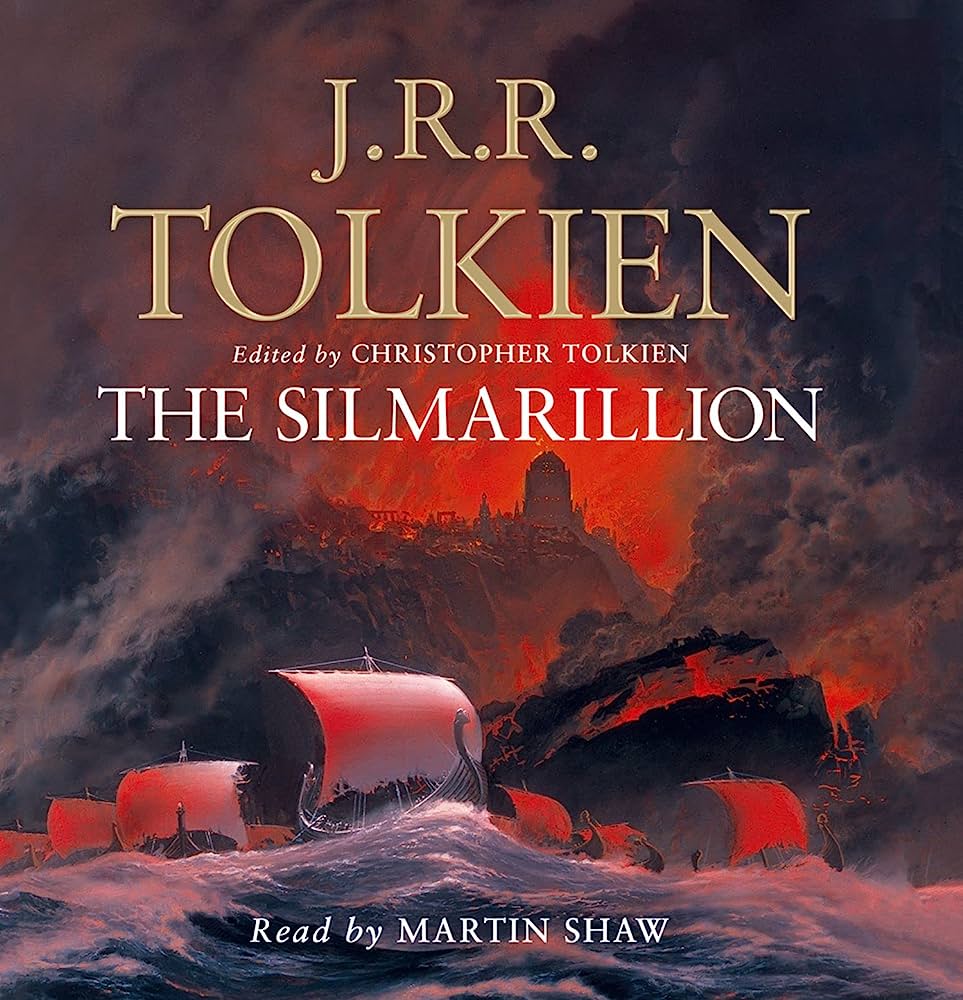
The Silmarillion by J.R.R. Tolkien
The Silmarillion, written by J.R.R. Tolkien, is a literary treasure that delves into the deep mythology and history of Middle-earth. Published posthumously in 1977, The Silmarillion serves as a prequel to Tolkien’s renowned works, The Hobbit and The Lord of the Rings. This review explores the vast tapestry of stories, themes, and characters woven together in The Silmarillion, showcasing Tolkien’s unparalleled creativity, linguistic brilliance, and passion for world-building.
Summary Of The Book
The Silmarillion by J.R.R. Tolkien is a mythopoeic work that serves as a prequel to his famous novels, The Hobbit and The Lord of the Rings. It presents a collection of interconnected tales that weave together the complex history and mythology of Middle-earth, from its creation to the events of the First Age.
The book begins with the Ainulindalë, the creation myth of Middle-earth, in which the powerful beings known as the Ainur participate in the shaping of the world under the guidance of the supreme being, Eru Ilúvatar. From this primordial beginning, the narrative delves into the rise and fall of the Valar, the guardians of the world, and their encounters with the evil Vala Melkor, who becomes Morgoth, the Dark Lord.

The Silmarillion introduces numerous significant characters, including the heroic Elves, the mortal Men, and other races that inhabit Middle-earth. The Silmarillion by J.R.R. Tolkien It explores their struggles, alliances, and conflicts as they contend with Morgoth’s wickedness, the quest for the precious Silmarils, and the consequences of their actions. Prominent figures such as Fëanor, the gifted and tragic Elf who creates the Silmarils, and Beren and Lúthien, whose love story is entwined with the fate of the Silmarils, capture the reader’s imagination and emotions.
Also Read-
- The Inferno by Dante Alighieri
- The Picture of Dorian Grey by Oscar Wilde
- Far From The Madding Crowd by Thomas Hardy
The themes explored in The Silmarillion are wide-ranging and profound. The Silmarillion by J.R.R. Tolkien It delves into the nature of good and evil, the lure of power, the destructive forces of pride and greed, the value of sacrifice and heroism, and the endurance of hope in the face of darkness. Tolkien’s masterful storytelling and meticulous attention to detail create a richly textured world that feels both ancient and timeless.
The Silmarillion showcases Tolkien’s linguistic brilliance and his passion for world-building. The Silmarillion by J.R.R. Tolkien His invented languages, such as Quenya and Sindarin, add depth and authenticity to the narrative. The book also reveals Tolkien’s expertise in constructing genealogies, cultural histories, and a coherent mythology that underpins Middle-earth, immersing readers in a fully realized fictional universe.
Tolkien’s prose in The Silmarillion is elegant, poetic, and evocative. He weaves together a tapestry of myths, legends, and ancient tales, giving the book a sense of epic grandeur and timelessness. The Silmarillion by J.R.R. Tolkien The fragmented storytelling approach, reminiscent of ancient oral traditions, enhances the mythological quality of the narrative.
The Silmarillion is not a traditional novel with a linear plot but rather a compilation of stories that collectively form a comprehensive picture of Middle-earth’s history. Its dense and complex nature requires attentive reading and an appreciation for the depth and intricacy of Tolkien’s mythopoeic vision.
Characters In The Silmarillion
The Silmarillion presents a collection of interconnected tales, chronicling the creation of the universe, the mythical events of the First Age, and the struggles of Elves, Men, and other beings against the forces of darkness. The book is divided into several sections, each exploring different aspects of Middle-earth’s history.
From the creation myth of the Ainur and their shaping of the world to the stories of the valiant Elves and their doomed quest for the Silmarils, the narrative encompasses epic battles, tragic romances, and the rise and fall of kingdoms. Characters such as Melkor (later known as Morgoth), Fëanor, Beren, and Lúthien are brought to life, showcasing Tolkien’s mastery in crafting deeply layered and memorable figures.
Themes and Literary Techniques In The Silmarillion
The Silmarillion explores various profound themes, including the allure of power, the nature of good and evil, the costs of arrogance and pride, the importance of sacrifice, and the endurance of hope. Tolkien’s richly detailed and poetic prose takes readers on a journey through Middle-earth’s vast history, immersing them in a world steeped in mythology, heroic deeds, and tragic destinies.
Tolkien’s meticulous attention to language and world-building shines through in The Silmarillion. He masterfully creates a complex web of languages, genealogies, and cultural histories, demonstrating his passion for linguistic and mythological depth. The Silmarillion by J.R.R. Tolkien His invented languages, such as Quenya and Sindarin, add a sense of authenticity and richness to the narrative.
The Silmarillion employs a fragmented storytelling approach, presenting a tapestry of interconnected stories and legends. This non-linear narrative style provides a mythological feel, resembling ancient texts or oral traditions passed down through generations.
The exploration of mythology and the blending of different genres, including epic poetry and biblical undertones, give The Silmarillion a unique and timeless quality. Tolkien draws upon various mythologies and folklore, infusing his own distinctive vision to create a mythology for his fictional world.
The book’s portrayal of characters and their struggles against overwhelming odds reflects Tolkien’s examination of human nature and the eternal battle between light and darkness. The Silmarillion explores the complexities of the human spirit, delving into themes of honor, loyalty, redemption, and the enduring power of love.
Conclusion
The Silmarillion is a testament to J.R.R. Tolkien’s genius as a writer and mythmaker. Its epic scope, lyrical prose, and profound themes make it an essential companion to Tolkien’s other works. The Silmarillion by J.R.R. Tolkien The book unveils the rich tapestry of Middle-earth’s history, providing a deeper understanding of the origins and conflicts that shape Tolkien’s fictional world. The Silmarillion stands as a testament to Tolkien’s unrivaled imagination, linguistic brilliance, and his ability to create a mythopoeic universe that continues to captivate readers with its timeless themes and enduring enchantment.
FAQ.
Q: Is “The Silmarillion” a standalone book?
A: Yes, “The Silmarillion” can be read and appreciated as a standalone book, separate from J.R.R. Tolkien’s other works such as “The Hobbit” and “The Lord of the Rings.” However, it is also considered a companion volume that provides a deeper understanding of the mythology and history that underpins Tolkien’s fictional universe.
Q: What is the genre of “The Silmarillion”?
A: “The Silmarillion” is a work of high fantasy that combines elements of mythology, epic poetry, and world-building. It explores themes of creation, morality, heroism, and the struggle between good and evil.
Q: Is “The Silmarillion” a difficult book to read?
A: “The Silmarillion” is known for its dense and intricate storytelling, making it a more challenging read compared to Tolkien’s other works. It requires patience and attention to detail, as it delves into complex mythology, numerous characters, and a vast timeline. However, fans of Tolkien’s world-building and mythology will find it rewarding.
Q: Is “The Silmarillion” a standalone book?
A: Yes, “The Silmarillion” can be read and appreciated as a standalone book, separate from J.R.R. Tolkien’s other works such as “The Hobbit” and “The Lord of the Rings.” However, it is also considered a companion volume that provides a deeper understanding of the mythology and history that underpins Tolkien’s fictional universe.
Q: What is the genre of “The Silmarillion”?
A: “The Silmarillion” is a work of high fantasy that combines elements of mythology, epic poetry, and world-building. It explores themes of creation, morality, heroism, and the struggle between good and evil.
Q: Is “The Silmarillion” a difficult book to read?
A: “The Silmarillion” is known for its dense and intricate storytelling, making it a more challenging read compared to Tolkien’s other works. It requires patience and attention to detail, as it delves into complex mythology, numerous characters, and a vast timeline. However, fans of Tolkien’s world-building and mythology will find it rewarding.

