
Q5. Discuss the narrative technique in The Bluest Eye.
ANSWER :
IGNOU MEG 06 Solved Assignment Q5 Answer 2025-26 – Toni Morrison’s The Bluest Eye (1970) is her first novel and a landmark in African American literature. The novel explores themes of racial identity, beauty, trauma, and societal oppression through the tragic story of Pecola Breedlove, a young black girl who dreams of having blue eyes. What makes this novel a masterpiece is not only its subject matter but also Morrison’s innovative narrative technique, which blends multiple perspectives, voices, and temporal shifts to reveal the complexity of Black experience in America.
The narrative structure of The Bluest Eye is non-linear, fragmented, and deeply poetic. Morrison employs a range of narrators—most notably Claudia MacTeer, an adult reflecting on her childhood, and an omniscient narrator who reveals inner psychological truths of various characters. Through this multi-voiced narrative, Morrison captures the collective and individual dimensions of Black girlhood, social conditioning, and racial self-hatred.
1. Multiplicity of Narrators and Voices
One of the most striking features of The Bluest Eye is its polyphonic narrative style. Morrison employs multiple narrators to present a range of experiences and interpretations.
The primary narrator, Claudia MacTeer, speaks from both a child’s and an adult’s perspective. Her voice provides the emotional and moral center of the novel. As a child, Claudia observes Pecola’s suffering without fully understanding its causes, but as an adult, she reflects upon it with empathy and wisdom.
Claudia’s narrative is written in the first person, allowing the reader to enter the lived experience of an African American girl in 1940s America. Through her voice, Morrison captures the nuances of black childhood—the confusion, resistance, and subtle awareness of racial and social injustices.
Interwoven with Claudia’s narration is an omniscient third-person narrative that delves into the lives of Pecola, her parents (Cholly and Pauline Breedlove), and other characters. This narrative voice provides psychological depth and social context, offering perspectives that Claudia could not have known as a child.
This technique allows Morrison to balance subjective emotion with objective insight, creating a multi-dimensional portrait of a community shaped by racism and internalized oppression.
2. Fragmented and Non-Linear Structure
IGNOU MEG 06 Solved Assignment Q5 Answer 2025-26 Morrison deliberately structures The Bluest Eye in a non-linear, fragmented manner. The story is not told chronologically but moves back and forth between past and present, childhood and adulthood, memory and narration.
This fragmentation mirrors the psychological fragmentation experienced by the characters themselves—especially Pecola, whose identity and sense of self gradually disintegrate under the weight of societal rejection and familial trauma.
By breaking the linear flow, Morrison resists the conventional narrative of progress and healing. Instead, she constructs a cyclical narrative where pain, racism, and internalized hatred are perpetuated across generations.
The structure also reflects the African American oral tradition, where storytelling is rhythmic, repetitive, and recursive rather than linear. Through this, Morrison emphasizes that the experiences of her characters cannot be neatly contained within a beginning, middle, and end—they are ongoing, inherited, and collective.
3. The Dick-and-Jane Primer: Irony and Structural Frame
The novel famously opens with a parody of the Dick-and-Jane reading primer, a textbook used in mid-twentieth-century American schools. The primer’s opening lines—“Here is the house. It is green and white…”—depict a white, middle-class ideal of family life.
Morrison repeats this passage three times:
-
First, in its perfect grammatical form, symbolizing the idealized world of white normalcy.
-
Second, with words running together (“Hereisthehouseitisgreenandwhite”), showing how this ideal becomes distorted and meaningless for Black children.
-
Third, without punctuation or spacing, representing total breakdown—a reflection of how this unattainable standard destroys the self-image of Black Americans.
This stylistic framing device serves as both irony and critique. It contrasts the bright, innocent white world of Dick and Jane with the harsh, violent world of Pecola and her community. By placing the primer at the start of the novel, Morrison exposes the racial exclusivity of American ideals of beauty, family, and success.
Thus, the Dick-and-Jane intertext is not merely a stylistic flourish but a narrative commentary on how cultural narratives shape and deform Black consciousness.
4. Shifting Points of View and Narrative Perspective
IGNOU MEG 06 Solved Assignment Q5 Answer 2025-26 Morrison’s narrative technique involves shifting points of view, allowing the reader to inhabit different consciousnesses. This strategy creates empathy while avoiding a single, authoritative voice.
For instance, when the narration shifts to Pauline Breedlove, we see how her internalization of white beauty standards leads to self-hatred and emotional alienation from her own family. Similarly, the chapter on Cholly Breedlove presents his childhood trauma and social humiliation, revealing the roots of his eventual cruelty and violence.
By offering these varied perspectives, Morrison refuses to reduce any character to a mere stereotype. The reader is compelled to see how systemic racism distorts human relationships, rather than simply condemning individuals.
This multiperspectival narration also reflects the collective nature of suffering and survival within the Black community. No single voice can tell the full story of oppression—it must be told through many, echoing voices.
5. Memory and Retrospection
A major narrative device in The Bluest Eye is memory. The adult Claudia looks back on her childhood, reconstructing events through remembrance and reflection. This retrospective mode gives the novel both intimacy and historical distance.
Memory allows Morrison to explore how trauma is repressed, remembered, and reinterpreted. Claudia’s narration is not merely a recollection of events but an act of moral and emotional recovery. She tries to make sense of Pecola’s tragedy, to understand why a child could believe that blue eyes would make her loved and accepted.
This retrospective structure also aligns with Morrison’s broader literary goal—to recover and give voice to experiences silenced by history. In this sense, The Bluest Eye functions as both fiction and testimony, reconstructing collective memory through individual remembrance.
6. Use of Symbolism and Imagery in Narrative
IGNOU MEG 06 Solved Assignment Q5 Answer 2025-26 Morrison’s narrative technique is rich in symbolism and imagery, which carry deep psychological and cultural meanings.
-
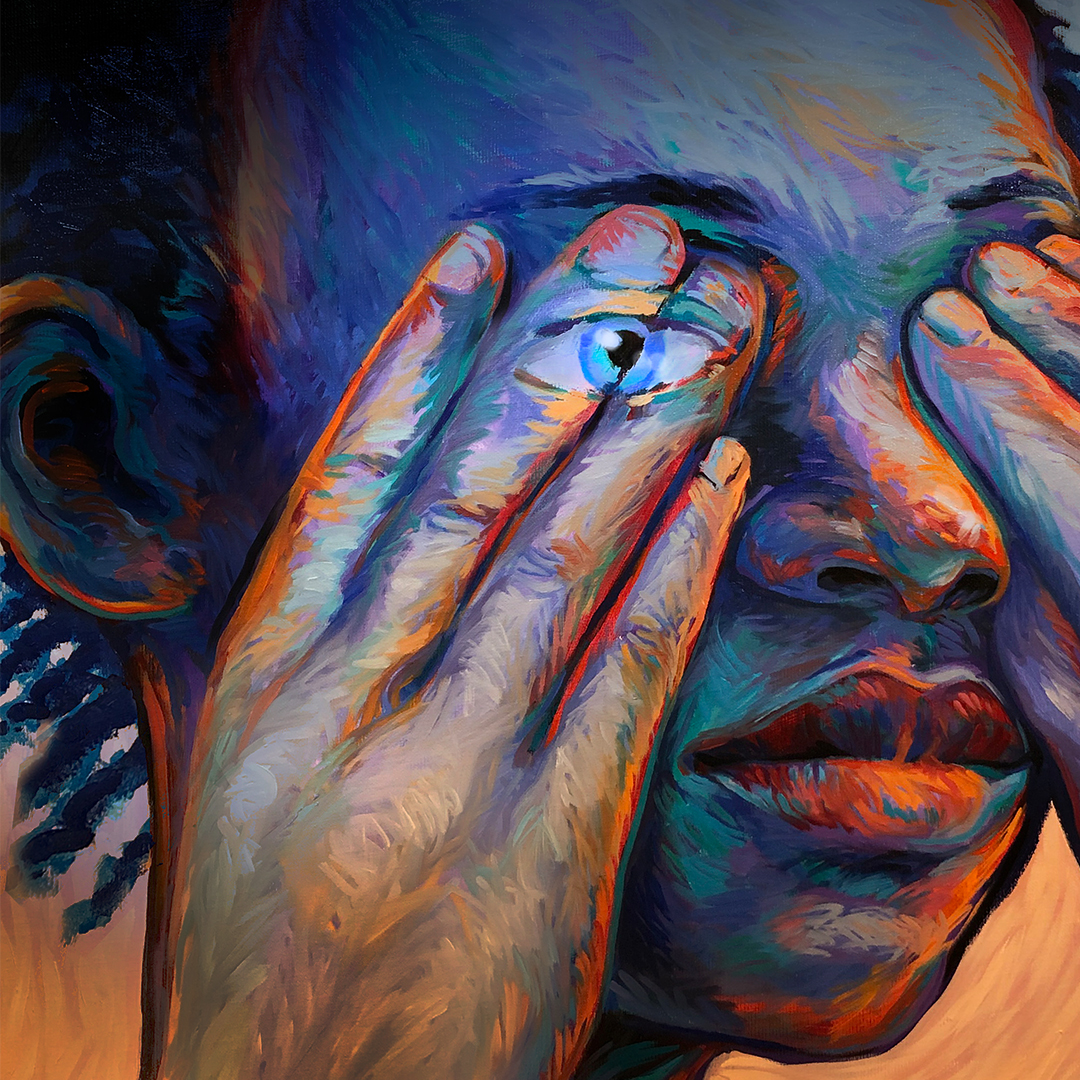
Blue eyes symbolize the destructive internalization of white beauty standards. Pecola’s desire for blue eyes is not a superficial wish but a symptom of profound racial self-loathing.
-
Seasons (Autumn, Winter, Spring, Summer) serve as chapter divisions, ironically structuring a story of decay rather than growth. The natural rhythm of life contrasts with the unnatural social order that destroys Pecola’s innocence.
-
Marigolds represent fertility and hope. Claudia’s belief that the marigolds didn’t bloom because of Pecola’s tragedy reflects how community guilt and suffering intertwine with natural cycles.
These recurring symbols connect the narrative threads and add poetic resonance, making Morrison’s storytelling both lyrical and mythic.
7. Oral Tradition and Musical Rhythm
Morrison incorporates the oral tradition of African American storytelling—its musicality, repetition, and communal voice. Her prose often resembles blues rhythms, reflecting pain, endurance, and memory.
The blues form, with its repetitions and emotional cadences, parallels the novel’s themes of loss and resilience. Morrison’s language is deeply rhythmic, blending biblical cadence, vernacular speech, and lyrical intensity. This technique turns the narrative into an almost musical performance of collective memory.
In doing so, Morrison preserves the authentic voice of her community while elevating it into art.
8. Psychological Realism and Stream of Consciousness
IGNOU MEG 06 Solved Assignment Q5 Answer 2025-26 Morrison uses psychological realism to portray the inner worlds of her characters. At key moments—especially in Pecola’s descent into madness—the narrative adopts a stream-of-consciousness style.
The dialogue between Pecola and her imaginary friend, for example, dramatizes her final psychological collapse. The narrative voice here blurs the line between reality and imagination, showing how deeply she has internalized society’s contempt.
Through this interior monologue, Morrison gives voice to the voiceless—an act of literary and ethical restoration.
9. The Role of the Community Voice
The novel also includes a collective or communal voice, expressed through gossip, neighborhood commentary, and social observation. This narrative layer exposes the complex moral dynamics within the Black community—its compassion, judgment, hypocrisy, and shared pain.
By including these collective voices, Morrison portrays the community not as a unified entity but as a web of interactions where individuals either support or destroy one another. The narrative thus becomes a chorus of voices, much like in Greek tragedy, surrounding and interpreting the fate of Pecola.
Conclusion
IGNOU MEG 06 Solved Assignment Q5 Answer 2025-26 Toni Morrison’s The Bluest Eye is not only a story of racial self-hatred and social oppression but also a triumph of narrative innovation. Through her multi-voiced structure, non-linear storytelling, and poetic language, Morrison captures the fractured consciousness of a people struggling against the distortions of white supremacy.
Her narrative technique transcends traditional realism; it fuses oral storytelling, memory, and psychological depth to reveal the invisible wounds of history. By weaving together Claudia’s personal recollections, omniscient insights, and symbolic frames like the Dick-and-Jane primer, Morrison constructs a narrative that is as complex and layered as the experience it depicts.
Ultimately, the narrative form itself becomes an act of resistance—challenging dominant cultural narratives and affirming the power of Black voices to define their own stories. The Bluest Eye thus stands as both a literary and political achievement, where storytelling becomes a means of healing, witnessing, and reclaiming identity.